Abstract
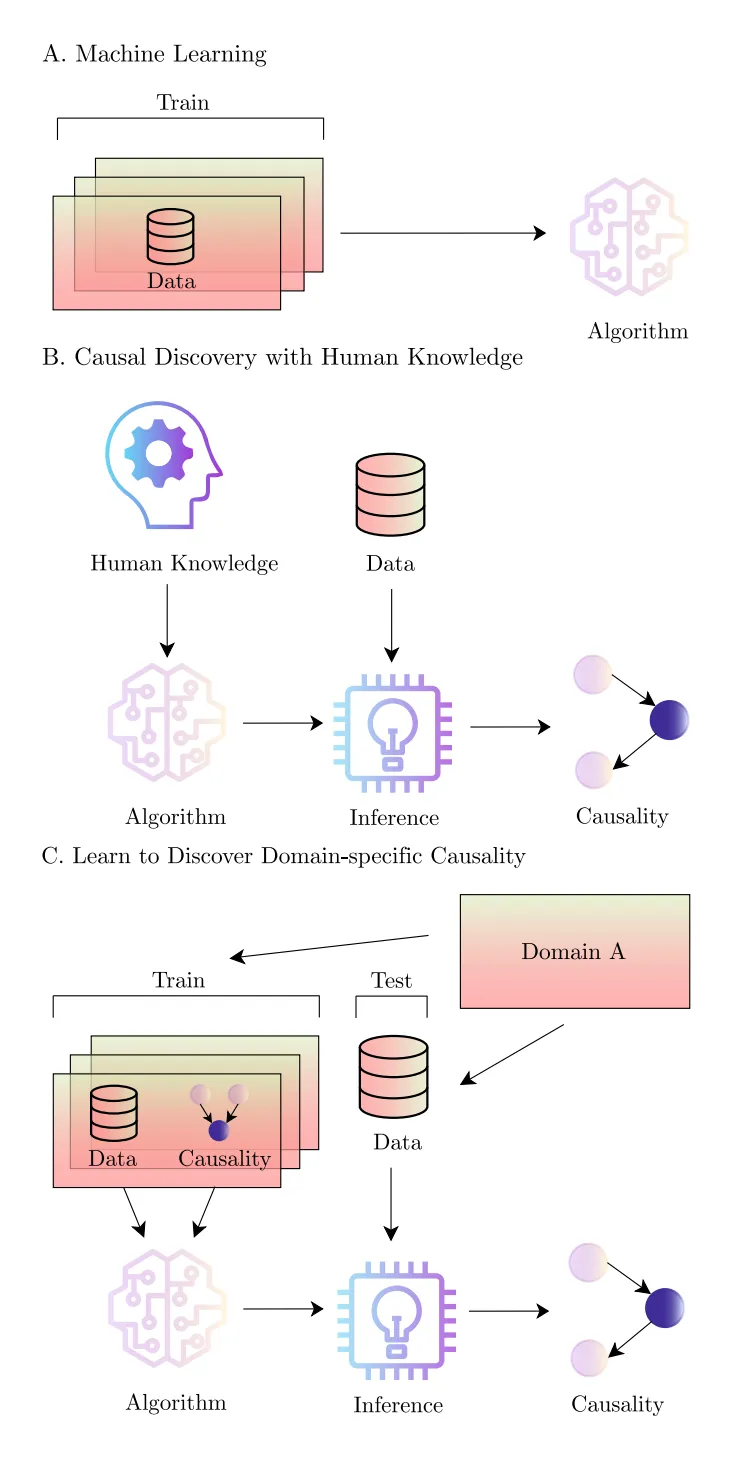
Causal discovery from time-varying data is important in neuroscience, medicine and machine learning. Techniques encompass randomized experiments, which are generally unbiased but expensive, and algorithms such as Granger causality, conditional-independence-based, structural-equation-based and score-based methods that are only accurate under strong assumptions made by human designers.
However, as demonstrated in other areas of machine learning, human expertise is often not entirely accurate and tends to be outperformed in domains with abundant data. In this study we examine whether we can enhance domain-specific causal discovery for time series using a data-driven approach.
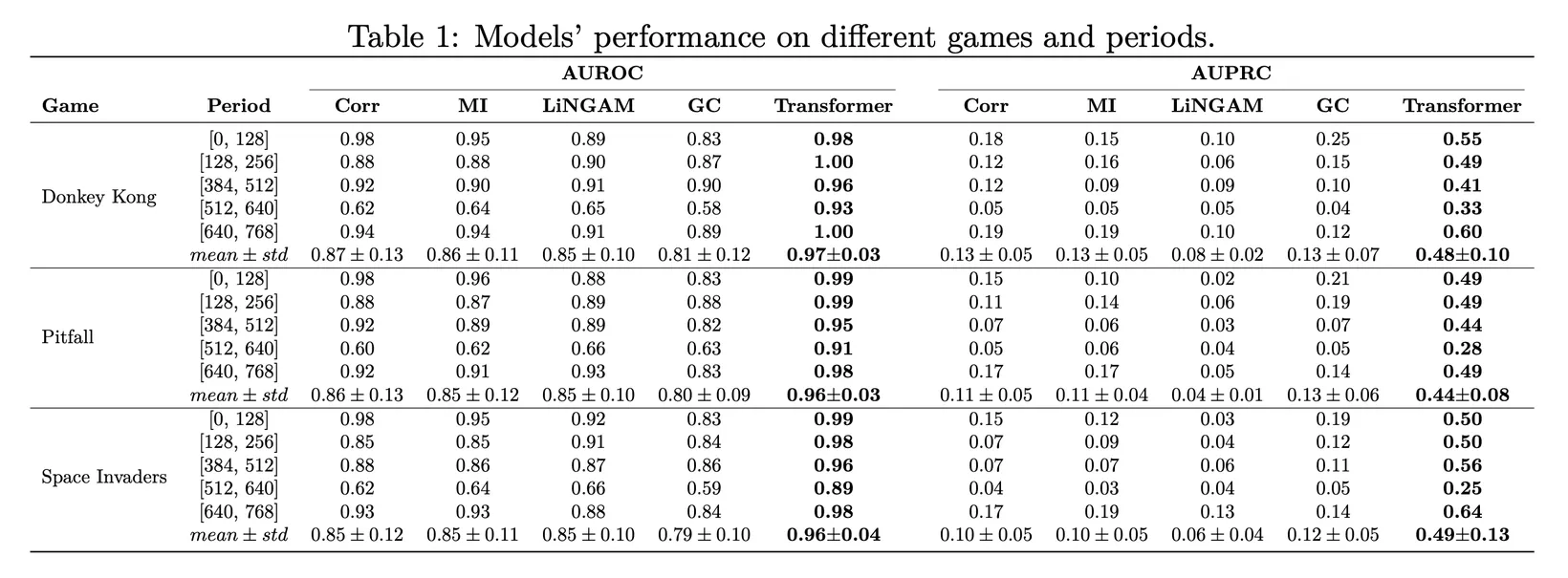
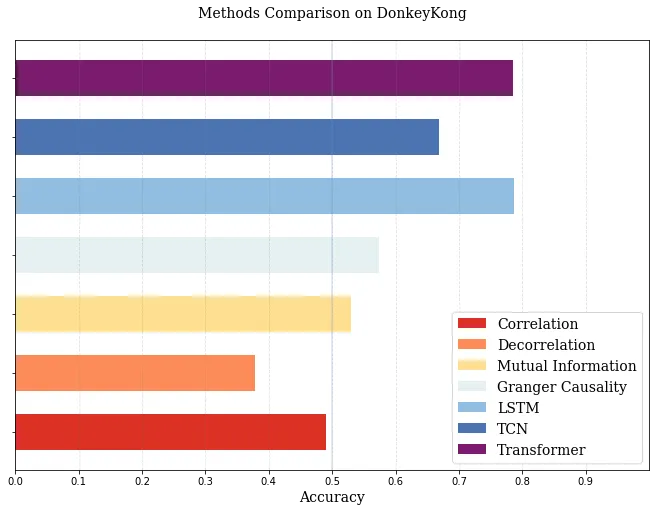
Our findings indicate that this procedure significantly outperforms human-designed, domain-agnostic causal discovery methods — such as Mutual Information, VAR-LiNGAM and Granger Causality — on the MOS 6502 microprocessor, the NetSim fMRI dataset and the Dream3 gene dataset. We argue that, when feasible, the causality field should consider a supervised approach in which domain-specific procedures are learned from extensive datasets with known causal relationships, rather than being designed by human specialists.
Results
The learned procedure holds up across games and durations on the microprocessor benchmark, and against the classical baselines it was compared with.